
The Witch's Homestead
"What would the witch do?"

For a long time, I tried to force getting published. I told myself a lot of ego-centric stories disguised as self awareness—a big one was that writing and sharing stories was what I was born to do. That story gave me a sense of purpose, something I could tell myself when I felt like existing wasn’t a birthright, but something I constantly needed to earn.
But in reality, I was already born and already existed, whether I’d “earned” it or not. And I wasn’t born to do, but to experience. To learn. To find meaning.
And yes, creativity is a part of me, but it’s also a part of all of us, because we all have that same well of imagination. Mine only feels overactive because of a lifetime of using dreaming as a coping mechanism.
But I’ve noticed a pattern since publishing my first novel, Dove in an Iron Cauldron. I worked on it for four years, most of the time absolutely blissed out every second of it. I loved researching—there is nothing like a teetering stack of books on a scratched desk next to an open notebook. I loved the fire of drafting. I loved the craft of editing and discovering what shape best served the story (with the help of a few amazing people). But the part that I absolutely dread-hated?
You probably guessed it:
Publishing.
The panic I experienced in the weeks leading up to publication was unlike any anxiety I’d felt before. My perfectionism reared its three ugly heads (I picture perfectionism as a cerberus, as one does). I went over every word painstakingly, absolutely ripping myself to shreds, writing and rewriting without mercy. I blacked out most of those weeks.
I chalked it up to first-novel jitters. To the idea that I wrote something that could be perceived as controversial, and me being too sensitive to handle harsh criticism.
But there was something deeper lurking beneath that crushing anxiety and fear:
Not wanting to be seen.
Because to be seen through my art would be to be seen the way I saw myself, which, despite a lot of inner work, lacked grace.
I’m actually bringing this up for a positive reason.
There’s a hermetic principle called the Principle of Rhythm, which states that everything flows like a pendulum—and the length that the pendulum swings in one direction indicates the length it can swing in another. So if your pendulum has swung far toward despair, you now have the capacity to swing that same length toward joy, toward hope.
This is not to say I’m ready to be seen, because I’m still working on that, step by step, little by little.
It is to say, instead, that I hold hope.
You already know writing is my primary channel for healing. A great deal of that healing began last summer as I worked on my next release…
DRUM ROLL PLEASE….
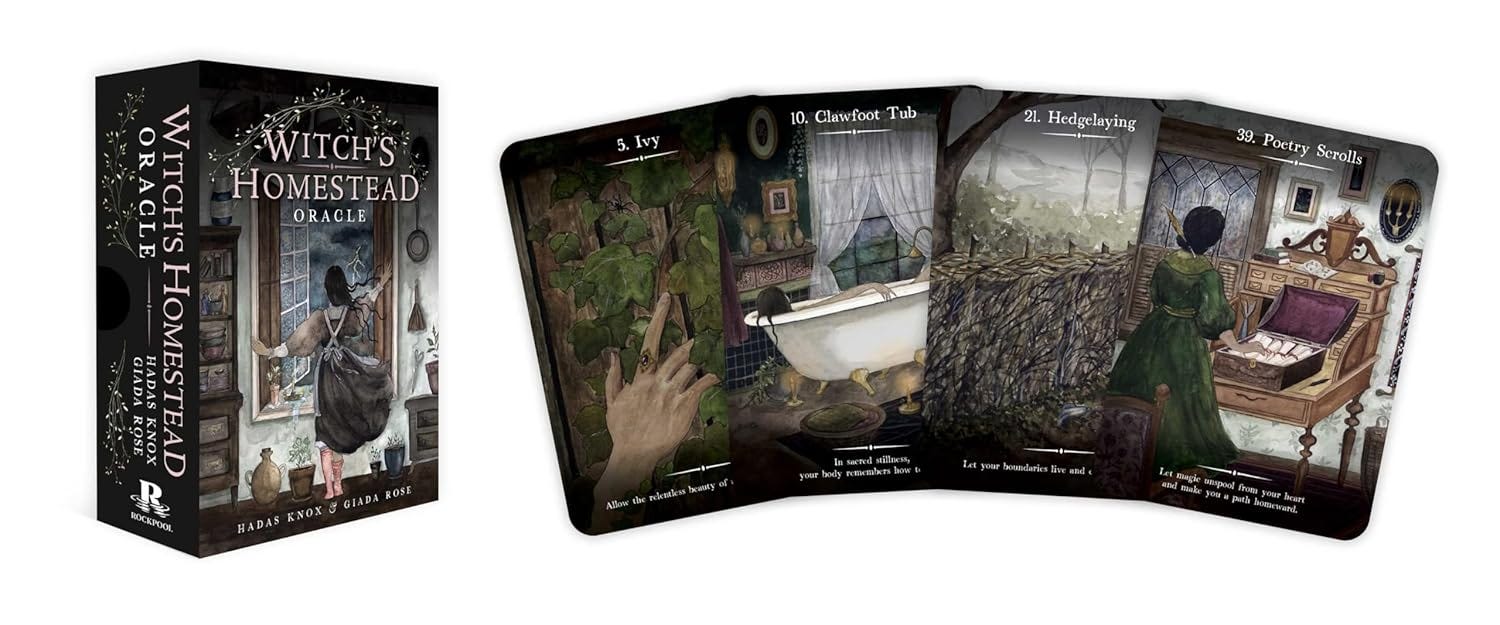
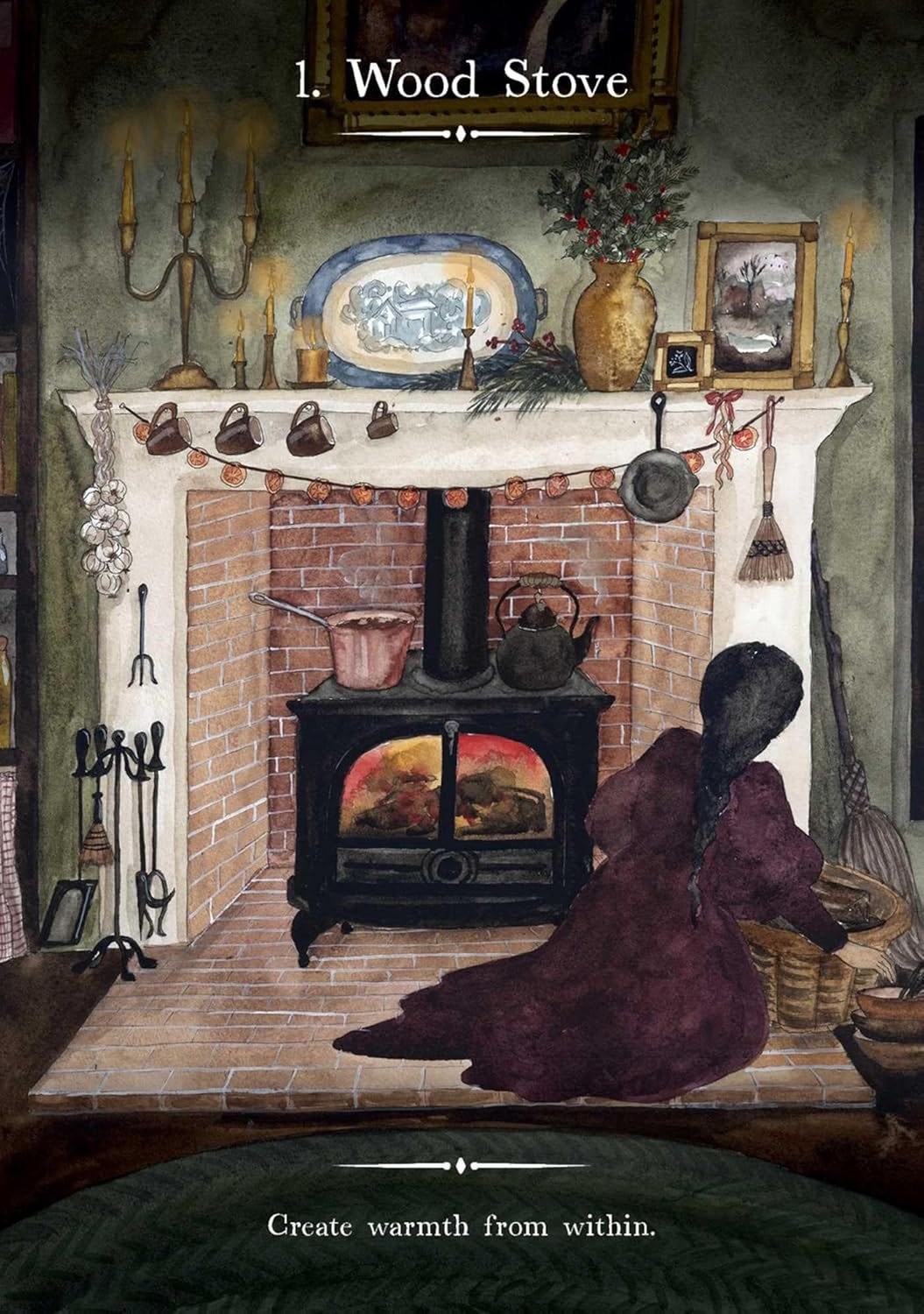
Introducing: The Witch’s Homestead Oracle.
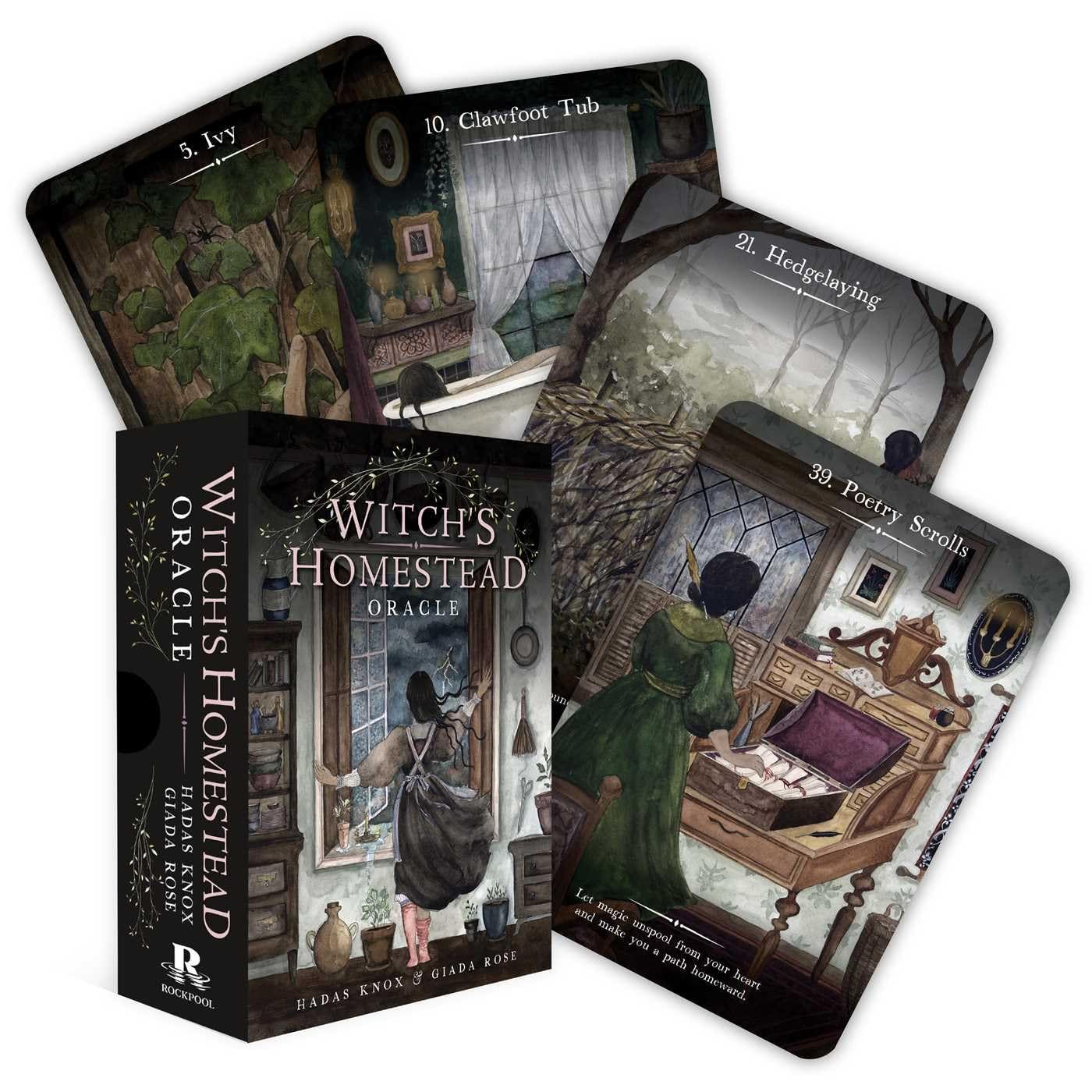
My second oracle deck—illustrated once more by Giada Rose and published by Rockpool Publishing—is now out for pre-order.
In our first deck, Folklore Oracle, Giada and I explored our shared passion for folklore and folk wisdom. This next deck is more personal, infusing ourselves into each card in a way we hadn’t done before. It’s Tales from the Green Valley meets Tasha Tudor meets cultivating magic in the mundane meets us.
Several of the cards were influenced by photos I’d posted on Instagram and captions/journal entries I’d previously written. And there’s something else unique about this deck:
a fiction component.
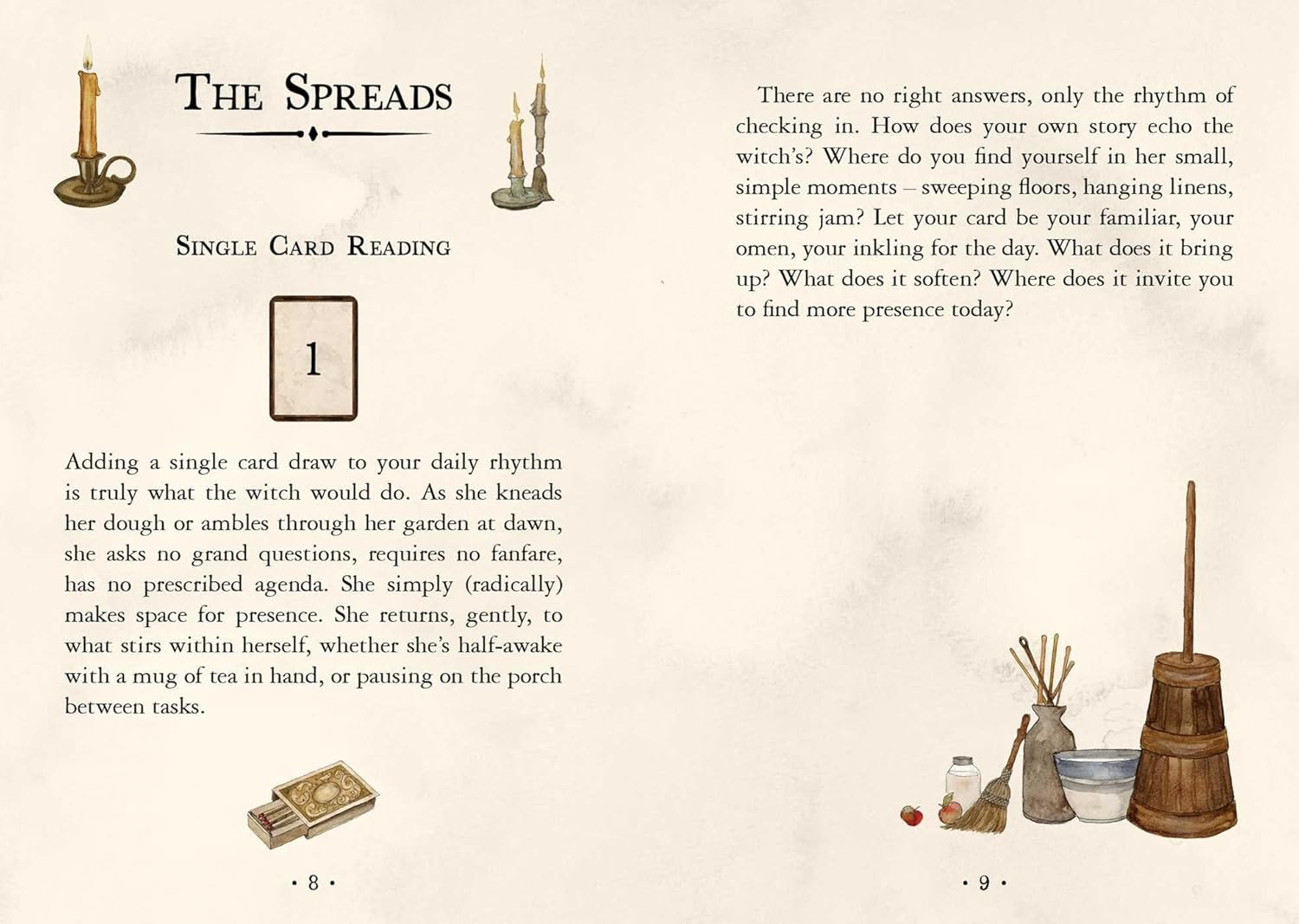
Each card has a more traditional written meaning as well as a short, immersive vignette to draw you directly into the witch’s world, where you can embody her stories and make them your own. As I wrote them, I spent my days holding each meaning—questioning what felt right, what stuck, what hit home. I’d stretch and pull my sourdough, meditating on how the rhythm of feeding, decaying, rising, and collapsing appeared in my own life. I’d feed the chickens, reflecting on how tending to them tended to me in return.
This project forced me out of my more comfortable resting place on the mental and spiritual planes, into the physical planes of my homestead and body. I felt knots inside me loosening as I found words for the sensations of living a life close to the land.
I would ask myself, “What would the witch do in this situation?”
I would let the cards become companions as I built a life—season by season, cup by cup, stone by mossy stone—that felt deeply like my own.
And that is what we hope the cards do for you.
Shall we pull one?
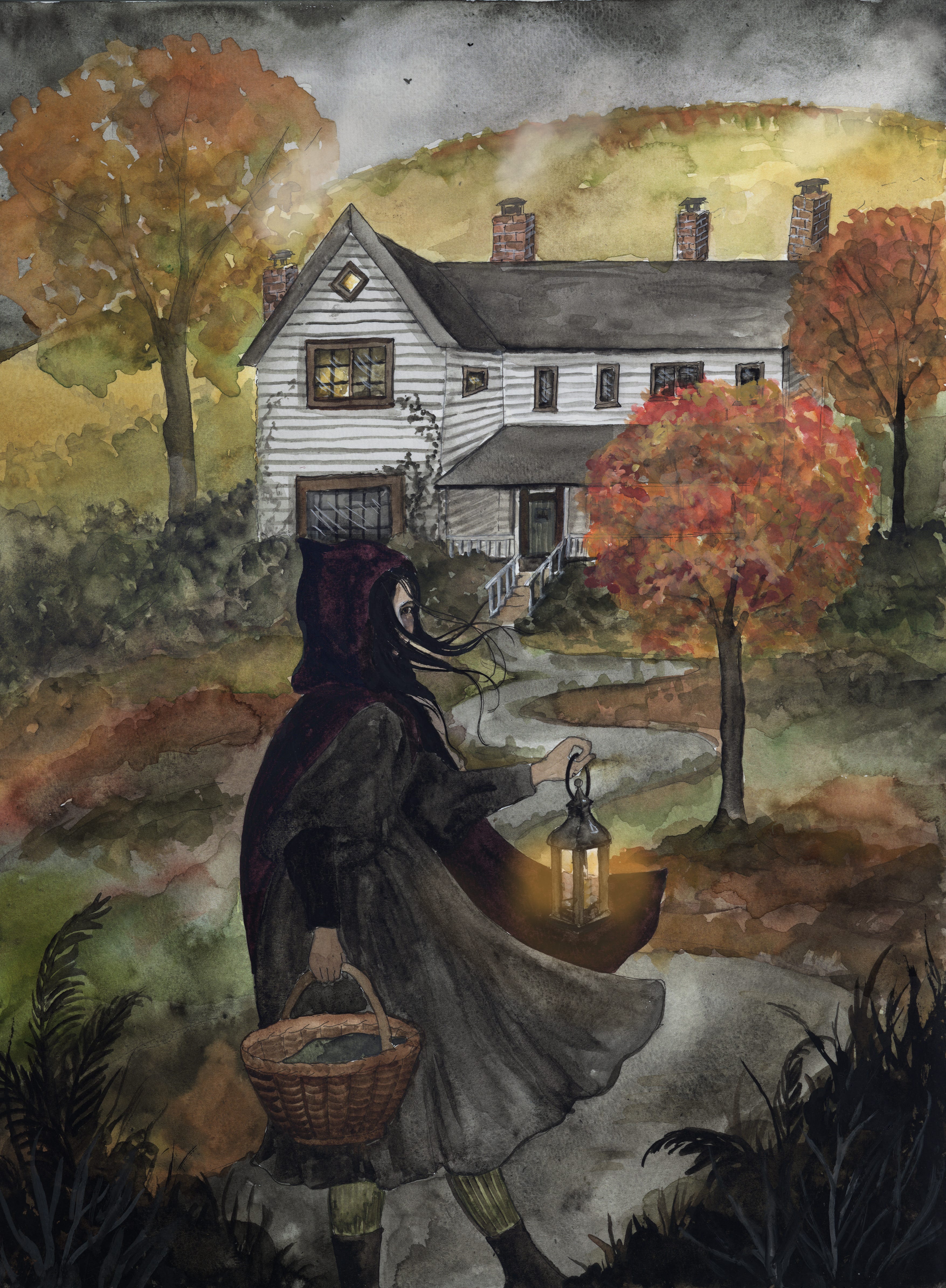
The Village Witch
The meaning:
Is she a witch, or does she merely hear what others don’t? Does she merely see in the darkness? The village witch walks the line between what is understood and what is feared. She knows the names of herbs and the whispers beyond the veil. She is the unknown, the uncontrollable, the mirror. She lives at the edge, both part of the village and apart from it.
Have you stepped into your own unknown? You may find yourself distanced from others when you do, but what wisdom would surface if you weren’t afraid to be seen as strange? What part of yourself have you exiled to keep others comfortable?
Trust your intuition, your weirdness, your otherness. Become someone who knows, and is not afraid to show it.
The story:
The farmhouse sits at the edge of the woods, a relic dressed in moss and ivy. White paint peels down the old wooden siding in frothy waves. Maybe you will repaint. Maybe you won’t.
You feel at home here, old bones within old bones. You hang bundles of mugwort from the rafters, and fire crackles at your practiced touch. Villagers still come, under moonlight or fog. They seek your counsel, your healing – though they rarely meet your eyes.
“She’s gone mad,” they whisper when they think you can’t hear. But you know: you’ve simply stopped pretending not to know.
You dream of your younger self. She asks, “Is it safe to become you?”
“Maybe not,” you answer. “But it is necessary.”
“Necessary to live in exile?” she asks.
“Not exile. Freedom.”
Other news:
I’m writing a new romantasy while I go through my selkie one with my writing group at the slow and steady pace of 2,000 words every Thursday night. I’m just six chapters into this brand new book, but I found a resource I find very cool for building vivid characters.
Character development can feel like pulling teeth. In Dove, my main character May started speaking to me right away, before the first word hit paper. She was soft-spoken but loud and clear in my mind.
But the other three main characters? They took some dentistry.
Anyway, each time I write a novel, I have to figure out how to bring my characters to life as if for the first time… probably because it is the first time with each one of them. I was searching YouTube for inspiration on the topic when my friend sent me an article called Your Moon Sign Is the Hunger Your Childhood Could Not Name. It explains how different moon signs (your nervous system’s regulation language) process under pressure—basically character-building gold.
“…the sign tells you what you hunger for, what you lost, what you compulsively reach for when the hunger becomes unbearable, and what you are ultimately being asked to learn.”
Whether you are into astrology or are writing a novel, the article paints a rich portrait of a person’s wounds, wants, and nervous system, so I just thought I’d leave it here.
Until next month,
I’m sending you whispered spells, hidden wisdom, and garden dirt beneath your fingernails.
With love,
Hadas
P.s. The thick red door is open. Step inside (pre-order) The Witch’s Homestead Oracle here :)
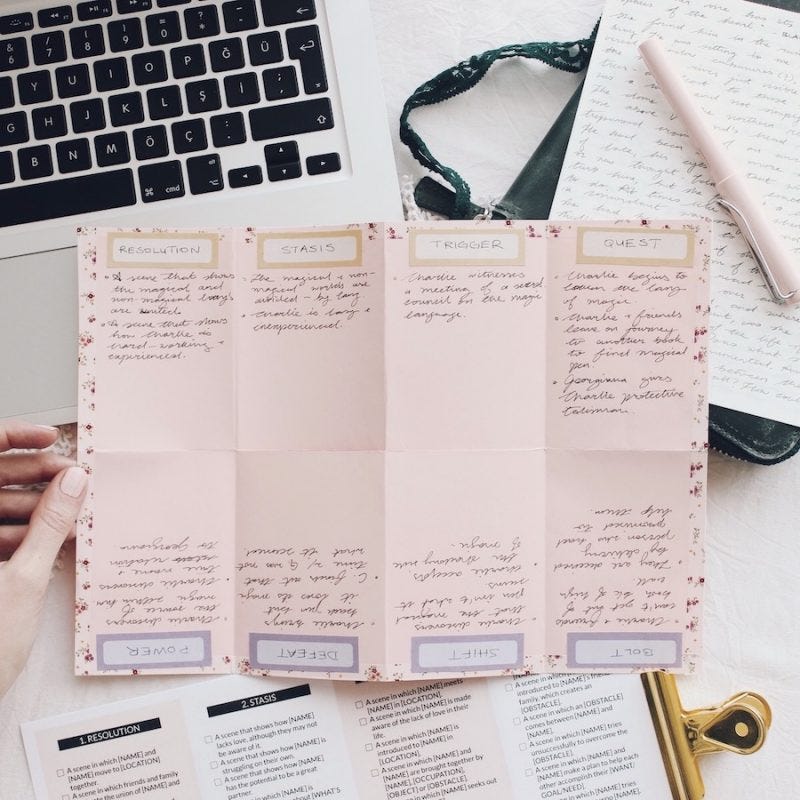
Want to write a novel but don’t know where to start? I use the One Page Plot method for every single story I plot. It prevents me from wasting time and getting distracted from the core themes of my story, while crafting the most compelling narrative possible.
You can learn more about it here. Use my affiliate code HADAS10 for 10% off :)
relatable asffffffff
Ma'am, please don't call me out like that in the guise of talking about yourself. I don't like it.