
Over my dead body
Thoughts from the afterlife, what if I never get published, and fantasy as a raw and messy joyride

My job is not to control the outcome. My only job is to show up.
This is what I’m working with after a month of hemming and hawing over what to do with my next book. Over repeatedly asking myself, “What if I never get published?”
Ok, you might be wondering: wait, aren’t you published already?
Sort of. I mean, yes. I am. But not in the way I’ve always dreamed of being. I’ve gone through the process of self-publishing with Dove in an Iron Cauldron, and I’ve gone through the process of traditional publishing with Folklore Oracle. Both were wonderful in different ways. I’m grateful for these experiences, and more than anything, for you for supporting me through them.
And yet, I’ve never been able to shake off the dream of traditionally publishing a novel. Not even after hundreds of rejections. I just can’t seem to let it go.
But here’s the thing: I don’t get to choose if I’m ever traditionally published. I do get to choose how I show up for my books, those that are written and those yet-to-be written.
So I started unpacking this relentless question—What if I never get published? The simple answer: Then I don’t. I die, eventually, and my books sit on my Google drive if internet is still a thing. The end. And I don’t really care because I’m dead and I don’t think the dead really care about things like material success.
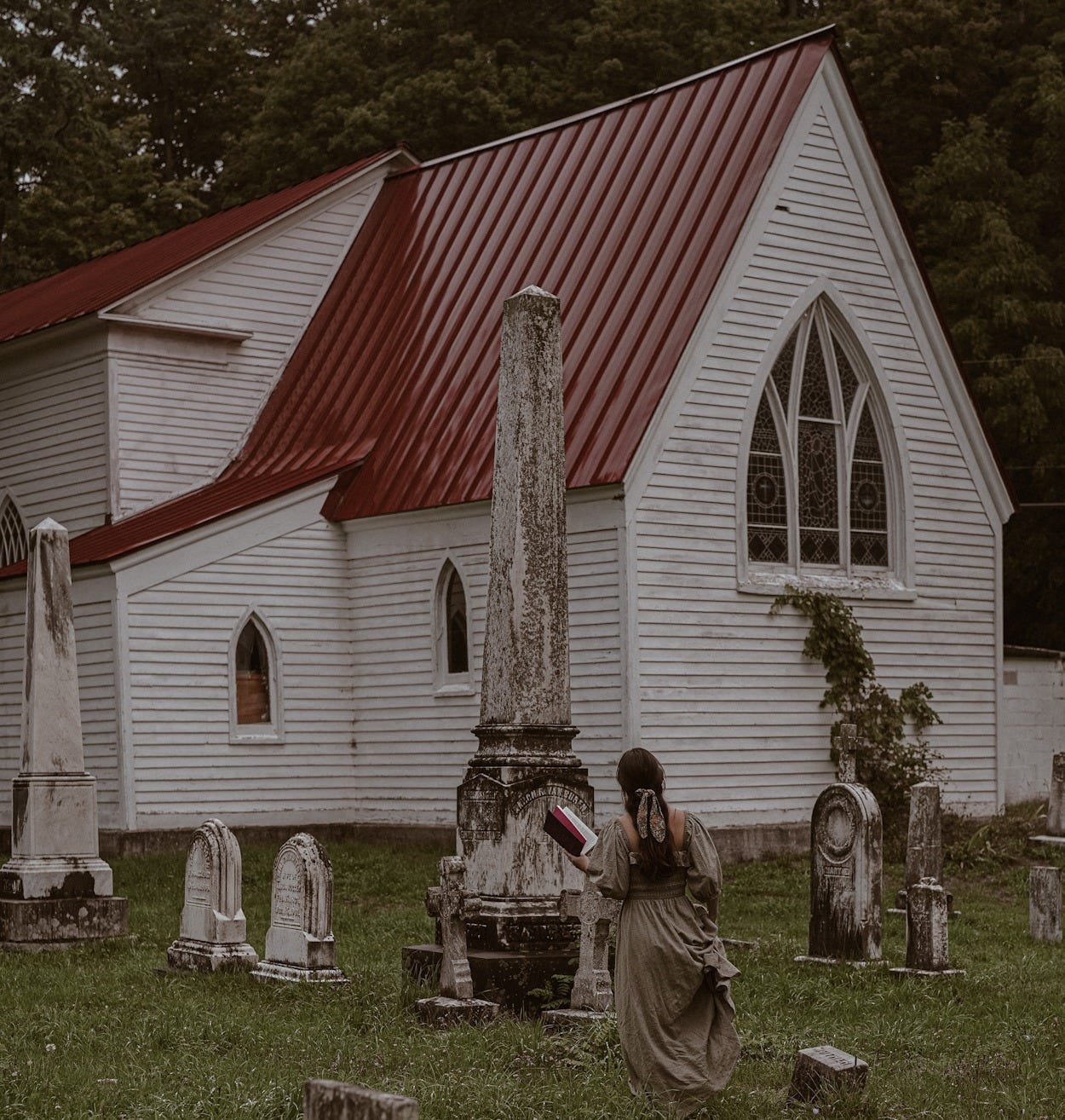
Personally, I don’t find this idea morbid at all. I find it freeing. I don’t believe my dead self would care about achieving a goal. She’s an ethereal being, and she’s probably already published many books in other lifetimes, and she’s laughing at me a little because this wasn’t one of the lifetimes where publishing books was part of the spiritual contract.
I do, however, think she’d care if I stopped writing. If I gave up trying to publish. If I stopped doing the things I love because they weren’t turning out the way I wanted.
Writing is my wild, moonlit joyride. The lighter I can hold the need for a specific outcome, without giving up, while showing up, the easier it will be to keep writing. The more potent the writing will be. The less critical I’ll be of it and myself, the freer I’ll be with my words, the bolder and braver and frankly darker. And that’s all very good, because it’s part of my truth, my story. Maybe it sounds like fanciful logic, but what do you expect from a fantasy writer?
If you’re here, odds are you have a fanciful bone or two in your body. Odds are you enjoy fantasy. I think there’s a reason why so many whimsical, sensitive people read fantasy. Yes, it’s made up, but it also attunes to certain frequencies that do exist, and fantasy writers are the ones who shape those frequencies into words that we can relate to in our own world. We make magic feel human. At least, we try.
That’s why we tell fairy and folk tales to children. For centuries, magical stories have helped us explore big themes—strife, heartbreak, transformation—in ways we can understand. And that magic doesn’t dissolve when we grow up. I still feel that very same childlike giddiness and glee when I fall into a great story.
I didn’t study writing in college, but during my senior year, for fun, I signed up for one writing class. The professor was an author of contemporary novels. She made a comment, at one point, about how she doesn’t understand why anyone would read or write fantasy, because there is enough in the real world to read and write about already. Why bother making up a fake world when this one is already so rich?
At the time, I read every genre, and I couldn’t put my finger on what irked me so much about her comment. Of course, we all have our tastes. And I agree, the real world is rich and brim-full of stories.
And yet, there are so many more that don’t meet the eye—even the keen eyes of artists and writers. Scientists theorize there are at least eleven different dimensions, seven of which are “curled up” or compacted at scales too small to observe. There are colors only animals can see, people who claim they can communicate directly with plants and spirits, secret languages traveling beneath the earth and through the sky, sensory experiences reserved only for the brink of life and death—testimonies from those who have officially died and returned, of God and angels and an unseen world.
I could spend a lifetime reading books on quantum physics, but ultimately I take comfort in the fact that I will never access the majority of what’s happening in secret. Everywhere I go, whether in a city, my small town, or an overgrown and forgotten graveyard, I know there is so very much more than meets the eye, ever more to discover, meet, and imagine.
Not to mention, as rich as this world—this dimension—is, it’s becoming increasingly more sterile. Partly because of AI, of course, but also because of language.
Language has become so advanced and given us incredible tools. Words like “trauma” and “mental health” help us name and share experiences that once went unspoken. But sometimes, in using these broad terms, we bypass the deeper, more personal details of what these experiences actually look and feel like. This language absolutely can be a bridge, but it often doesn’t feel that way, and we miss a chance for true connection.
Fantasy invites us back into that terrain, exploring emotional depth and consequence more viscerally than shorthand language can. It’s a realm where we—characters—explore the grittiest, messiest, rawest details of the light and dark within our stories. Where actions have deep, meaningful consequences. Where fate feels heavy and relentless and we come face to face with shadows and monsters and goddesses, and through true hardship and trials, we find our strength. We grow.
Every character, in fantasy and in life, plays a role. We need the monsters. Villains are integral to the narrative, to a satisfying resolution. In my life, in this particular story about publishing, I might call them literary agents. But their rejections are not signs of my failing, but of misalignment. They’re lessons, each and every one, helping me discover what character I want to play.
I want to be the character who is ok with never getting published AND who doesn’t give up trying. The one who keeps querying, simply because I have a book that invited me to do so. The one who asks herself, every day, what showing up might look like. It doesn’t have to look like querying. It could be working on the next book in this trilogy, writing the month’s newsletter, reaching out to bookstores or libraries, even journaling. All that matters is that in some way, shape, or form, it feels like showing up for my passions, my dreams, my life. I’m excited to see what comes of it.
Maybe I’ll reach a point where I realize I want to be the character who takes matters into her own hands and self-publishes again. It’s a definite possibility! But I started writing this book in 2020, and after 5+ years of working on it, I need to wait for the moment it doesn’t feel like a failure, but like the right choice. I owe it to us (the book and me) to wait. Until then, because I’ve promised myself to keep showing up, I’ll wrap up with the first page of the finished historical fantasy romance that I’m back to querying.
Yours in whimsy and stubborn, reckless tenacity,
Hadas
P.S. What does showing up look like for you? I’d love to learn more about you, your goals, dreams, desires, and passions. These are the conversations I’m most interested in having.
Chapter 1
1066 A.D. Rouen, Normandy
Shai
Savta’s apothecary sat tucked into a bustling cobblestone street, a star of David carved above its oak door. Inside, threads of frankincense smoke mingled with the tang of vinegar, dried lavender, and a faint metallic hint of powdered iron. Shelves sagged under the weight of clay jars and glass vials, their Hebrew and Latin labels smudged by time. Overhead, bundles of herbs swayed gently on the rafters with each passing draft.
And there, in the midst of it all, stood my grandmother, my savta. Her olive hands moved with practiced precision—mixing salves, scribbling recipes on parchment, rummaging through jars that were yet to find a home.
Urged by need, customers tread the worn stone slabs, smoothed by countless footsteps and dusted with the chaff of dried herbs. Beneath their footsteps, something stirred. A sound, a pulse—waiting. Even I didn’t hear it at first.
I lingered in the shadows, my mismatched eyes cast downward—one black, one green, the mark of the demon-touched. Try as I would, I could not hide my eyes, nor the olive skin and black hair that marked me as different. Yet people left me, for the most part, alone. Perhaps they were preoccupied with the war that waited just beyond the sea’s edge—they said the duke was gathering ships. But it mattered little to me. All I knew, all I cared about, was the hush before Savta’s mortar struck stone, the way the river Seine crept over my bare toes when I waded in.
Or perhaps they thought me too studious to pose a threat—dried horehound for sore throats, willow bark for headaches. I was always focused on some task—searching for a recipe, measuring ingredients on Savta’s scale of brass weights. No one ever seemed to see me beyond my services, my obedience to their trusted apothecary. And they certainly never saw me as I was meant to be: a child with a future outside Rue aux Juifs.
In this room, everyone’s dreams carried the weight of prophecy. But only mine strained against their bindings, fighting to break free.
Let me know if you’d like to read on. Who knows, maybe the character I want to play decides to publish the whole book through Substack (haha).
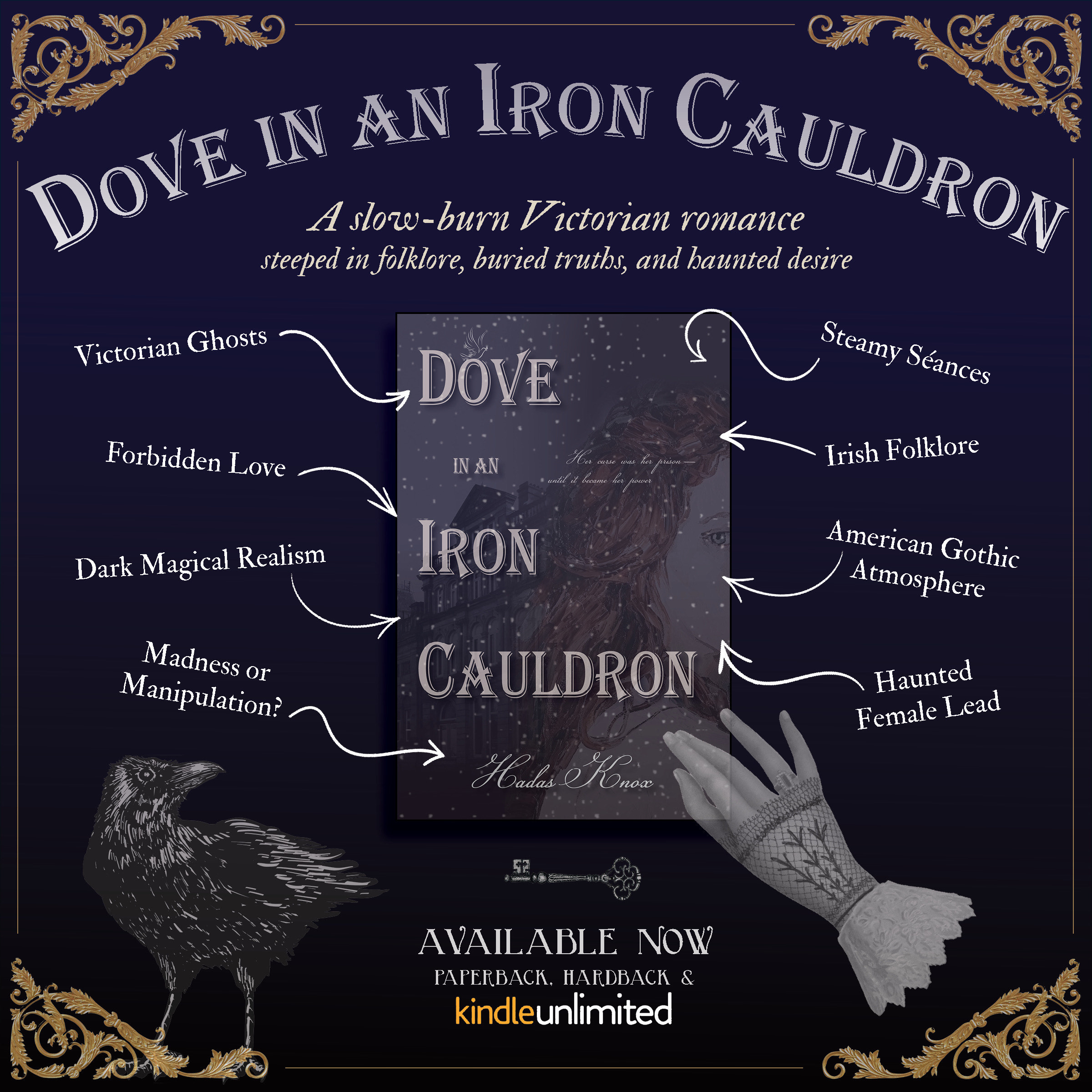
If you’d like to read more now, Dove in an Iron Cauldron is my American Gothic romance. It is an autumn/winter read to the core, so if you’ve been waiting for the right time to dive in, light those candles, pull on those wool socks, and get cozy. If you’ve already read it, reviews go so far in helping me get the word out and truly mean the world (all worlds!) to me. You can leave one on Amazon or Goodreads.
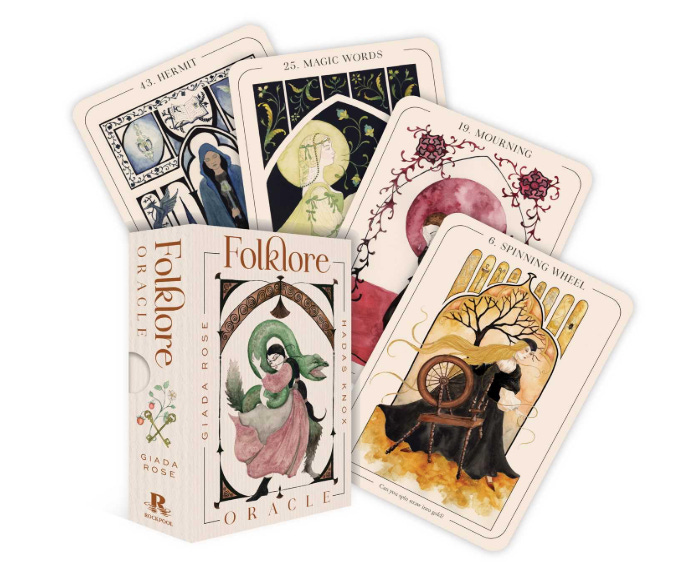
In Folklore, October is one of two months when the veil between worlds is thinnest. Perfect time to hone your intuition with Folklore Oracle.
Lastly, if you’re new here, you can read more musings like this (and magical fiction) by subscribing below. I’d love to have you with me for all the plot twists yet to come.
I wish I could say something elegant about how much I love the way you write, but I'm afraid motherhood has turned my brain to mush right now 😂 I'll just tell you simply how much I adore your tales and the musical way you tell them and I hope you never stop! 🤍🌿🦢
Wonderful reflections, Hadas. I relate to the idea of both holding onto a dream and understanding that I am a writer whether that dream comes to fruition or not. I just completed a graduate certificate in fairy tales at Pacifica Graduate Institute, taught by one of my role models — Sharon Blackie. It was an incredible experience and more than anything helped me to reframe how I see my creative path unfolding. I realized there are many ways of being a writer/storyteller. One of Dr. Blackie’s suggestions was to start a story circle in your community. As one of my neighbors is a professional storyteller, I already have a foot in the door, so to speak. I have lots of ideas percolating right now but I wanted to share that with you in case it helps you as much as it did me.